Context GrammarDesign for context-aware AI

CLI. GUI. Now intent.

Intent is called the new interface.
Context Grammar is how it finally reads the human.

A new concept for designing AI experiences — introduced here.

Intent is called the new interface, yet no agent today reads the human situation clearly enough to act on it. Context Grammar is the missing layer — a grammar that turns a raw request into action that fits the moment. The foundation for Agentic UX.

An introduction to Context Grammar

AI that understands. Boundaries that stay yours.

English audio

Read transcript

A WORLD OF POSSIBILITY

Intent is often called the next interface. Say what you want to do, and AI helps you do it. It is an exciting possibility. And we are getting closer.

THE NEXT STEP

Today, we still move between apps and connect the information ourselves. As agents become more present in our lives, the opportunity is bigger: help that knows when to speak, when to wait, and when to ask us.

A FAMILIAR KIND OF CARE

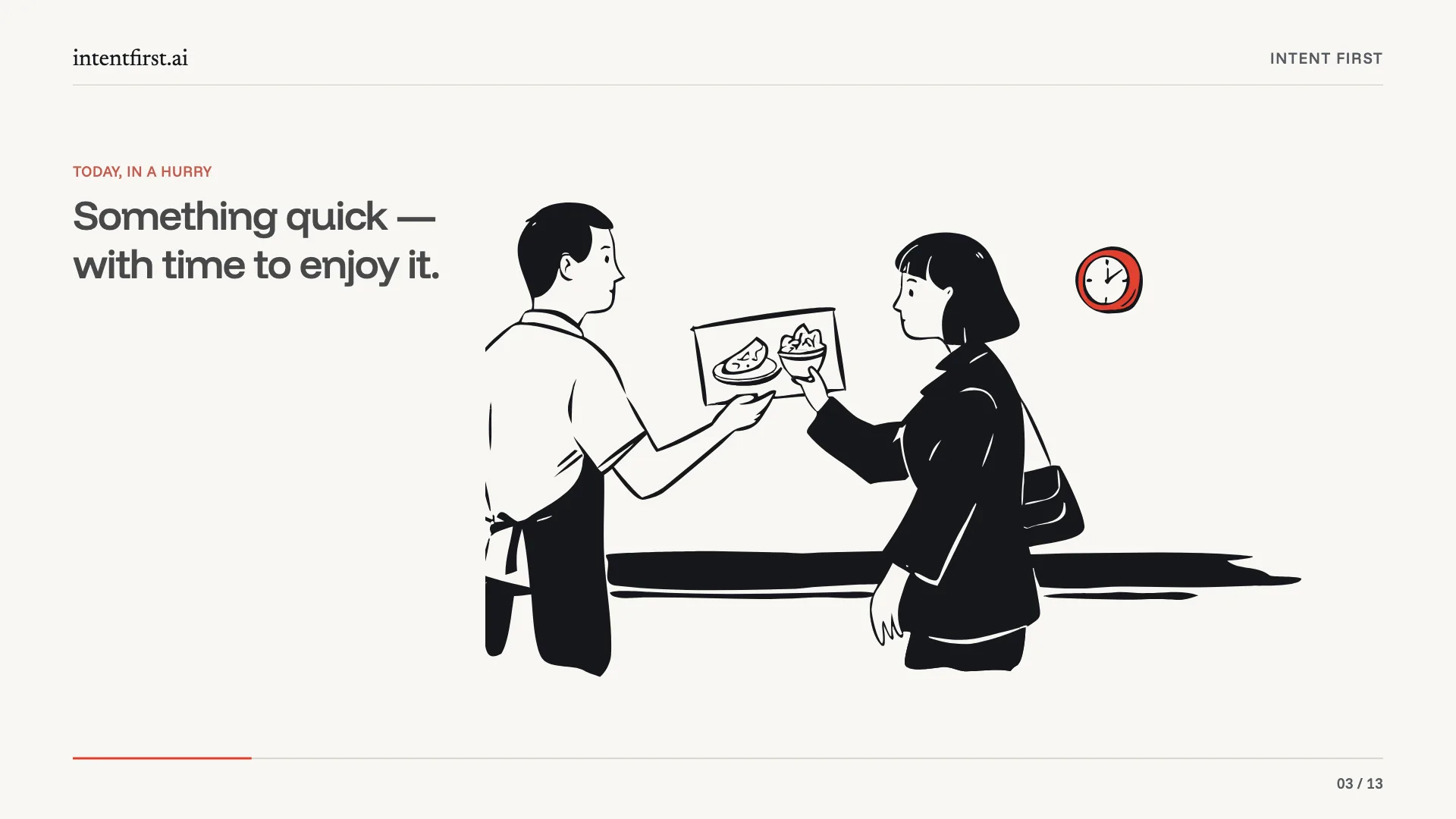
Think of your usual restaurant. The host remembers your favourites. Today, you are in a hurry, so they suggest something quick, with time to enjoy it. They know when to help, and when to ask.

CONTEXT GRAMMAR

Context Grammar was created for that relationship. A design language connecting human intent, changing circumstances, and the boundaries we choose. So AI can offer thoughtful help, while we stay in charge.

ONE SMALL REQUEST

Your son needs new shoes. Brain already holds his latest measured size, a growth estimate, and his preferences: no logos, no bold patterns, all black, right down to the soles. You do not have to explain everything again.

ONE SENTENCE · THE RIGHT CONTEXT

You add, remember, he needs these for PE. That means grip for running, a lighter shoe, and a sole that bends. Together with your budget and Friday’s deadline, those needs shape a useful shortlist. Anything uncertain is checked.

SAME GOAL · A DIFFERENT MOMENT

On the train, one hand is holding the strap. The same choices become easy to browse with your thumb. The details are still there, whenever you want them.

TWO SCREENS · ONE SHARED MOMENT

At home, you connect your television. Your son compares shapes and designs on the big screen. Your Disclosure Dial keeps prices, delivery dates, and checkout on your phone. Same shoes, different information, for each person.

UNDERSTANDING YOU CAN SHAPE

You had slip-ons in mind. But he says, I would rather have laces, so I can pull them tight. The shortlist updates, and Brain remembers his preference. Next time, it starts with lace-ups, unless he tells you otherwise.

HELP ON YOUR TERMS

Your Autonomy Dial lets the assistant research and prepare. The final purchase stays with you, on your phone. One tap, when you are ready. Helpful independence, with a clear place for your decision.

THE MEETING · SAME CARE, DIFFERENT CONTEXT

The same care guides us at work. When you plug into a meeting room screen, Context Grammar senses the room. Your private notes and internal discussions fade away, presenting only what your clients need to see. And when plans are agreed on, the assistant shapes the next steps, but keeps the final commitment in your hands. Knowing when to speak, what to shield, and where to pause for your decision. That is help on your terms.

ONE CONNECTED DESIGN LANGUAGE

Both moments use the same structure. Six situation signals describe what matters now. Brain connects three layers: Identity, Learning, and Now. Personal and shared Brains contribute within permission limits. Two relationship dials, Disclosure and Autonomy, set what may be shared and done. The six-stage pipeline brings them together.

LET’S EXPLORE

As agents keep working alongside us, there is so much to look forward to. More time, more possibilities, and help that respects our intentions and boundaries. That is the future Context Grammar helps us design. Let us explore it together.

Try it — parse a sentence

Intent Parser

ctx.parse/v1

Specimens

Intent First reads language as intent, context, and constraints instead of forcing users through menu paths.

Cancelthe 4 p.m.with theTokyo teamand let them know why.

├─ intent CANCEL
├─ context.event 4 p.m. sync -> today
├─ context.audience Tokyo team (n=5)
├─ constraint.notify required
└─ constraint.reversible true
confidence92%
Composed surface - Confirmation

Cancel - 4 p.m. Sync - Tokyo Team

Apologising - I need to move our 4 p.m. We will find a new slot tomorrow inside Tokyo hours.
Cancel and send noteEdit draft

How it decides

Six stages, and two layers that never switch off.

A request arrives as a sentence. It leaves as one device-neutral command, or as a question the agent decided it had to ask first. Each stage below is a page — what it reads, what it emits, and what it refuses to do.

The pipeline

Always on

Moments · Volume 1

Real situations in life and work —
and how Context Grammar helps.

A moment is one real situation, written down before any interface was drawn, then run end to end through Context Grammar. Each one declares the stages it exercises — this is the framework working, not describing itself.

Car dashboard showing the emergency pickup story in CarPlay

01Family / Emergency

The school called. AI coordinated pickup while Mai kept driving.

A nurse call becomes a safe pickup plan while Mai keeps driving, with the final change confirmed by voice.

Open the emergency-pickup Moment

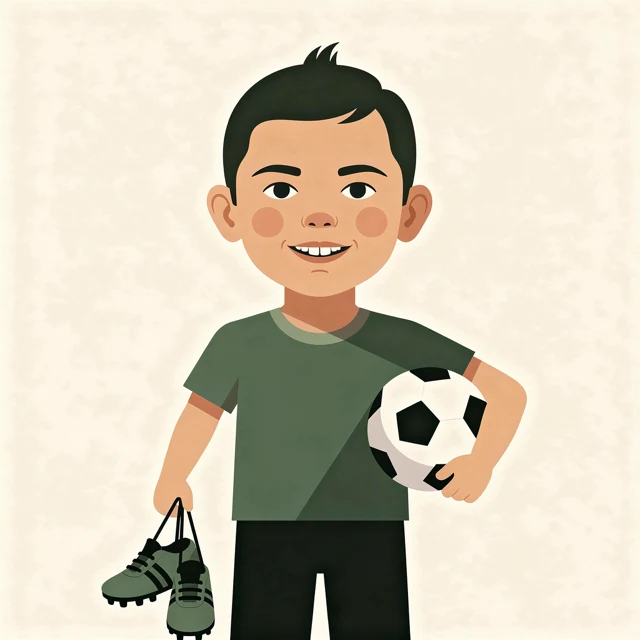
School activity context represented by a child with soccer equipment

02Family / Operations

Three kids, three schools, one clear plan.

AI turns messages from three schools into one prioritized family plan, while parents approve anything that affects someone else.

Open the school-day Moment

Album artwork for the song that connects the family's related interests

03Family / Connection

AI found a shared interest that brought a father and his children closer.

With Aoi's sharing settings respected, AI notices that she and her father enjoy different versions of the same story and suggests music they could enjoy together.

Open the family-connection Moment

Shoe shortlist interface adapted for the family's available screen

04Family / Fluid Handoff

AI helped a parent find the right shoes, then adapted the choice to train and home.

AI uses the child's size and preferences to shortlist available shoes, simplifies the phone for one-handed train use, then lets parent and child decide together on the living-room screen.

Open the three-screen shoe Moment

A person using recovery equipment they already own after training

05Commerce / Life Support

AI helped the family use the gear they bought instead of leaving it unused.

After checkout, AI suggests a practical use for equipment the family already owns; they can correct the goal or ignore the suggestion.

Open the after-purchase Moment

A family resting together during a trip whose plan can adapt

06Travel / Multi-Agent

AI adjusted the family trip when plans changed, without making everyone start over.

AI keeps two useful plans ready, then adjusts for the lottery result, weather, fatigue, and what the family wants that day.

Open the adaptive-trip Moment

A parent choosing an item from a physical grocery-store shelf

07Commerce / Life Support

At checkout, AI remembered the snack the family regretted.

A smart cart recalls one household preference before purchase while keeping the choice reversible and private from the retailer.

Open the in-store preference Moment

A diagram showing verified knowledge crossing between teams while private context stays behind

08Work / Connection

One team reused a proven solution without seeing another team's private notes.

A colleague reuses a solution that already worked, while the private notes and relationships behind it stay with the original team.

Open the knowledge-bridge Moment

Maya standing with the cross-functional team prepared for the focused recovery sprint

09Work / Organizational Intelligence

Checkout abandonment rose 18%. Maya reviewed the evidence and started a focused recovery sprint.

The Project Master Brain prepared a scoped recommendation from approved evidence. Maya approved the project before the team received its context.

Open the organizational-Brains Moment

All momentsNine situations, built to inspect.

What the framework insists on

01

Intent is the primitive

The interface starts from what the person wants done, not from the application tree.

02

Context is visible

Inferences become editable tokens, so the system can be corrected before it acts.

03

The surface is built last

Controls appear only when a decision needs them, then disappear when the intent resolves.

Writing

The thinking, before it became a framework.

Context Grammar did not arrive whole. It was argued out in public, one essay at a time, and the essays are still the most honest version of the reasoning.

Read the writing